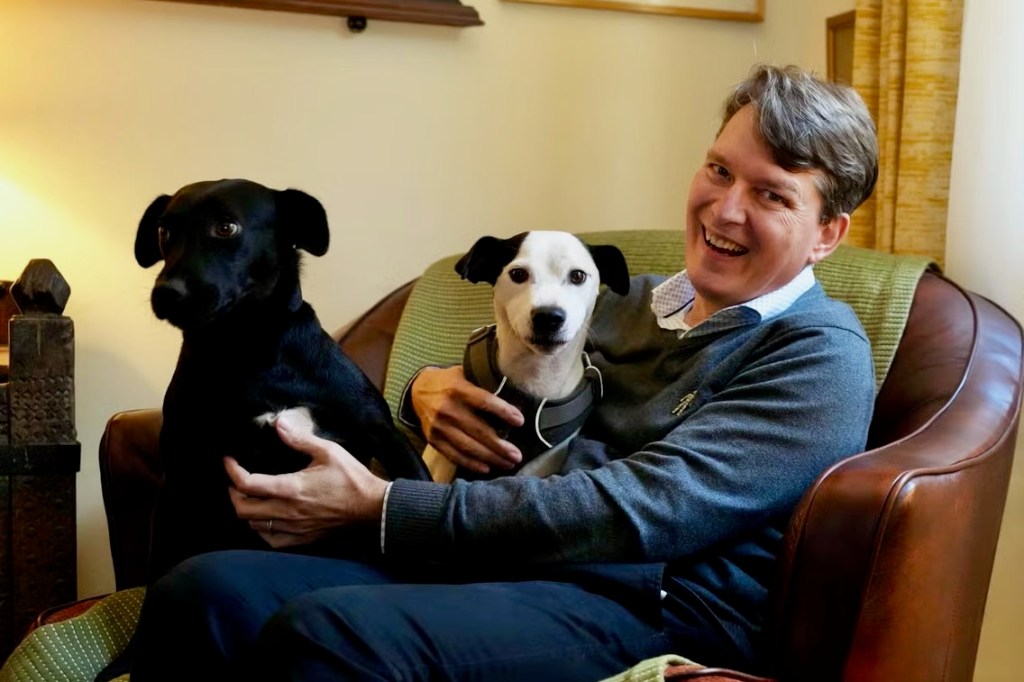
Extract of an article written by Ella Walker and published by The Independent on October 30, 2024.
Bruno Vinel, 59, lives in Stourbridge with his husband and two rescue dogs. In 2015 he saw his GP about a scratchy throat, but a routine blood test flagged sky-high PSA levels, indicating prostate cancer.
“While visiting my parents in France, I went to the GP for a sore throat. Because I was 50, in France they do the PSA test automatically. It came back with a reading of 19, which was very, very high.” Two months later, Vinel was diagnosed with stage 3 prostate cancer. That December he had the tumour removed, but the cancer had spread. He underwent radiotherapy and hormone therapy for two years and is still monitored for what is now a long-term condition. The stress left Vinel depressed. He began pottery as a way to try to recover – now it helps him have “hope for the future – it’s a way to leave some kind of legacy”.
“When you’re doing pottery, you’re in the moment. You’re using your hands, your brain is focused. Those activities are very important to try to find a way to cope with the emotions. It’s a challenge as well,” he says. “I still have 20 years ahead of me. I want to think that. I asked my oncologist: ‘Am I going to die of prostate cancer?’ And she said, ‘No, because we’ve got plenty of options to treat and keep it at bay.’”
He wants PSA tests to be more readily available for people to support funding for new treatments. “I read about Sir Chris Hoy,” says Vinel. “It’s devastating he hasn’t been diagnosed in time to be able to be treated successfully.”
Prostate Cancer UK is highlighting that, although one in eight men are diagnosed, too many find out by chance, often when it has spread. Find out more: prostatecanceruk.org.
Read the full article here: https://www.independent.co.uk/life-style/health-and-families/chris-hoy-people-france-japan-stourbridge-b2638054.html
A personal note on my health
Three months after the prostatectomy surgery, in 2016, a PSA test revealed a bio-resurgence of the prostate cancer cells. The surgery had not completely eliminated the cancer but luckily no tumour was found. As a consequence I was prescribed 36 sessions of radiotherapy and androgen suppression therapy for two years, which were completed in the summer of 2018.
Since then, I am regularly monitored by the UCL Hospital oncology team, with a PSA test every three to four months. From time to time, when the PSA raise again, I undertake a six-month androgen suppression therapy course.
So far, I have been lucky as the prostate cancer cells responded well to the androgen suppression therapy and no tumour were found through regular PSMA pet scans.
I live as healthy as possible, manage to get going with the side effects of the androgen suppression therapy, and enjoy life as much as I can.
 Bruno Vinel
Leave a comment