

This article closes my recent series of posts on Linkedin on the theme of resilience. I want to end where resilience really lives: in lived experience.
What follows is not a theory of resilience. It is the story I shared recently on David’s Diaries podcast, and how I learned to develop resilience and adaptability through two cancer diagnoses, two redundancies, multiple career changes and a life lived across different cultures.
My hope is simple: that my journey helps you recognise and honour your own.
Modest Beginnings, Quiet Foundations
I was born in Paris 60 years ago, into a modest, hard-working family. My parents left school at 16. My dad became a jeweller; my mum worked in sales after studying gemmology. My grandparents were tailor, waitress, removal worker, postal sorter. There was no corporate ladder mapped out for me.
Yet these early years planted deep roots of resilience:
- Work ethic and responsibility – my dad left home before I woke and returned after I went to bed. I learned that effort and commitment matter.
- Curiosity and culture – at family lunches I listened to adults debate politics, life and culture. I wanted to understand the world, not just pass through it.
- Freedom and exploration – summers in the French countryside gave me space to roam, build dens, swim and take risks.
Nothing in this background “predestined” me to be a CEO, CFO or executive coach. But it gave me three essential ingredients for resilience: effort, curiosity and the courage to step into the unknown.
Early Transitions: Learning to Reinvent
Over 37 years I held 17 different executive roles in six countries: France, Spain, Morocco, Mauritius, the Comoros Islands and the UK. I started as a general manager at 24, setting up a subsidiary in Spain. I became a finance director, a commercial director, an entrepreneur launching a tech start-up, and later a director in a large organisation in the UK.
Each move meant:
- A new culture and language.
- A new team and set of expectations.
- Letting go of a familiar identity and building a new one.
Those transitions taught me that resilience is not only about surviving crises. It is also about repeated reinvention: being willing to say “I don’t know yet, but I can learn”.
Looking back, the traits that helped me then are the same ones that helped me later through far more painful tests:
- Love of learning – from plastic manufacturing to water and electricity distribution, web development and coaching.
- Adaptability – treating each new role and country as an experiment, not a verdict on my worth.
- Seeing opportunities in challenges – recognising that a relocation, a new role or even a redundancy can open doors I hadn’t imagined.
All of that was preparation for the last ten years.
The Last Decade Tested Everything
At 50, I was diagnosed with prostate cancer. I had no symptoms and luckily a GP in France happened to request a PSA test; the levels were high. What followed was a long, demanding journey:
- Prostate surgery
- Then the news that the cancer had started to spread outside the prostate
- 36 sessions of radiotherapy
- Two years of hormone therapy to suppress the remaining cancer cells
- The emotional and physical side effects of treatment
In 2017, I fell into a deep depression driven by trauma, medication side effects and old scars linked to growing up gay in a traditional environment. With support from a psychotherapist, I slowly emerged.
Then, in 2018, I suffered another blow: a stomach tumour, discovered almost by chance. Fortunately, surgery removed it completely. But the psychological impact of a second cancer diagnosis was real.
During this period, I was still working in demanding roles. I was also navigating redundancy and career change.
What Actually Made Me Resilient
When people hear this story, they often ask: “How did you keep going?”
The truth is, it wasn’t one big heroic trait. Reflecting back on this time I realised that it was a combination of inner attitudes and external resources that I leaned on again and again.
Here are the ones that mattered most.
1. Positive Realism – Not Blind Optimism
I am naturally a “glass half full” person. But resilience is not pretending everything is fine. During my treatments and depression, I had to face some hard truths:
- The prognosis was uncertain.
- My energy and mood would fluctuate.
- My old way of “pushing through” everything no longer worked.
Positive realism meant asking: “Given the reality, what is still possible? What support do I need?”
This mindset helped me stay hopeful without denying risk or pain.
2. Relationships That Hold You Up
Resilience for me is impossible without relationships.
My parents’ unconditional, if often unspoken, support in earlier years laid a foundation of security. In recent years, my husband Mark has been central. As a former psychotherapist, and as my partner, he has:
- Encouraged me to express emotions I once hid.
- Helped me see that I must look after myself first if I want to help others.
- Reminded me that it is okay not to be perfect.
I also leaned on a psychotherapist, later peer coaches during my coach training, and a network of friends and colleagues across countries.
One of my biggest lessons? Resilience is not self-sufficiency. It is the courage to ask for help.
3. Multiple Identities Beyond Work
Twice in my life I have been made redundant. Each time, I rebuilt my career from scratch. But what protected me from collapsing when a role ended was this: work was never my only identity.
Outside work, I am:
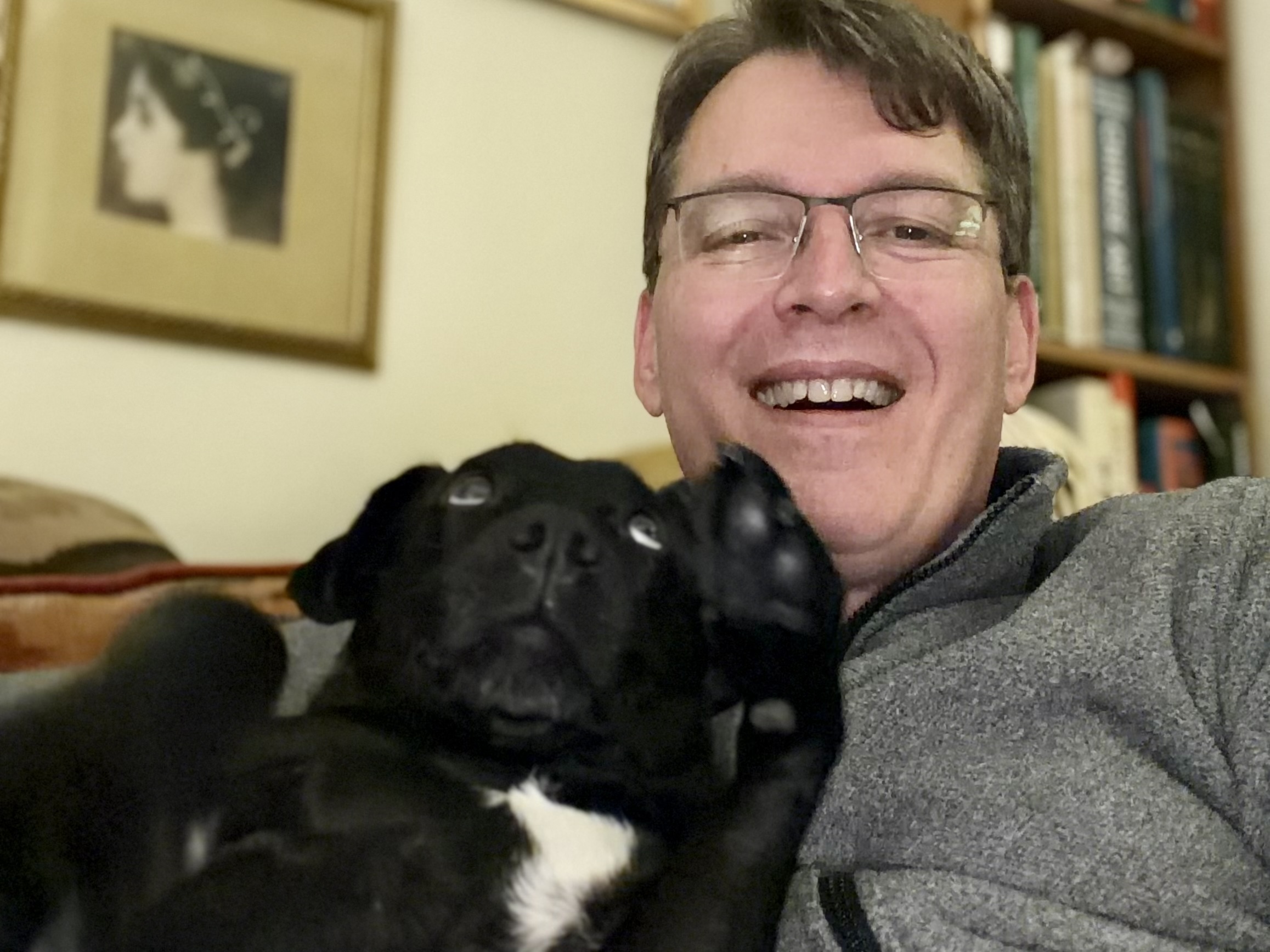
- A dog owner, walking our two rescue dogs in the countryside.
- A photographer, now volunteering with the Royal Photographic Society, organising walks and exhibitions.
- A potter, experimenting with glazes in a small studio at the end of our garden.
- A gardener, growing vegetables and fruit on our allotment.
We do not have a television at home, so my time goes largely into creative and outdoor activities. These pursuits are not hobbies in the light sense. They are sources of meaning, calm and joy, especially when life and work feel heavy.
When your sense of self is spread across different roles and passions, a career shock is painful – but it is not total.
4. Integrity and Authenticity
Through my career in leadership, and now in coaching, two values have anchored me:
- Integrity – doing what I say I’ll do and holding myself to high standards.
- Authenticity – allowing more of my true self to be visible, including my story as a gay man and as someone who has lived with cancer.
For many years, I kept my emotions, and parts of my identity, hidden. Only later in life did I have honest conversations with my parents and say, finally, “I love you”. It took nearly 60 years.
Resilience, I’ve learned, is not about building a thick skin. It is about becoming more whole – aligning your inner world and outer life, even when that feels vulnerable.
5. A Commitment to Lifelong Learning
Every major change in my life has been accompanied by learning something new:
- Plastic tanks rotomolding to build a manufacturing plant.
- The technology supporting the water and wastewater industry.
- Web development to develop a tech start-up.
- New leadership skills across cultures.
- Executive and holistic coaching.
- And recently coaching patients with cancer.
Learning keeps me future-oriented. It reminds me that I can evolve, not just endure.
When I chose to leave corporate life and step into executive coaching, it was not a retreat. It was the natural next step of everything my experiences had taught me: about transition, loss, rebuilding and growth.
Turning Scars into Coaching
Today, I work as an executive coach for senior leaders. Many of my clients are navigating transitions:
- Returning to work after serious illness.
- Stepping into new executive roles or new countries.
- Rebuilding confidence after redundancy or restructuring.
When I sit with a CEO, CFO or senior leader in a difficult moment, I do not speak as an outsider. I speak as someone who has been there:
- Leading large teams across cultures.
- Facing health crises while still showing up to work.
- Reinventing my career more than once.
The traits that made me resilient – positive realism, relationships, multiple identities, integrity, authenticity, learning– now shape how I coach.
I listen deeply. I ask questions that open possibilities. I help leaders see that their story does not end with the crisis they are in.
Questions for Your Own Resilience
As this series on resilience closes, I’d like to leave you with a few reflections:
- Where in your life have you already survived more than you thought you could?
- Which relationships truly hold you when things are hard – and do they know how important they are?
- How many identities do you have beyond your job title? What could you nurture more?
- Where might you need to ask for help, rather than trying to cope alone? To who?
Resilience is not a fixed personality trait. It is a set of choices, practices and supports we can build over time.
If you are a senior leader facing a major transition – a new role, a health challenge, a redundancy or a return to work after cancer – you do not have to navigate it alone. Coaching, and the right conversations, can make the path not easier, but more intentional, more human, and more aligned with who you are becoming.